What users say about OSCAR
Please note that information on this page is dated, and presented here for historical interest
Dr. Susan Harris
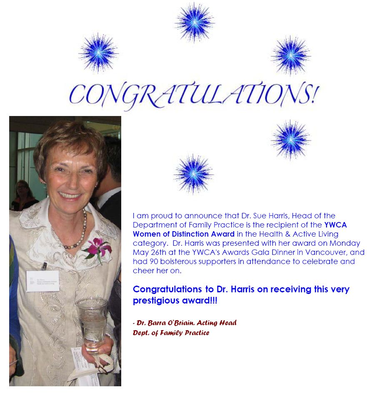 Past Head of Family Practice, BC Children's & Women's Hospital
BC Family Physician of the Year 2008
Over the last 9 years I have had personal experience with three different electronic medical records. There is no question in my mind about which provides the best options for a family practice office. OSCAR is firstly a patient-centered record which provides evidenced-based care in a cost-effective manner which is is not intimidating. Given that software is free and service charges are much less, OSCAR provides ongoing savings for those who are committed to an EMR. There are also are OSCAR options for the patient to access parts of his or her own chart. In addition, OSCAR is flexible and can be altered readily for new guidelines, practice recommendations and fee schedules. Finally OSCAR is built on a community of practice: physicians across the country sharing a common goal: to provide high quality care to patients through communication and working together.This is a model for the electronic age and OSCAR should be considered by any family physician looking to an electronic health record. and new way of practice.
Dr. Martin Dawes
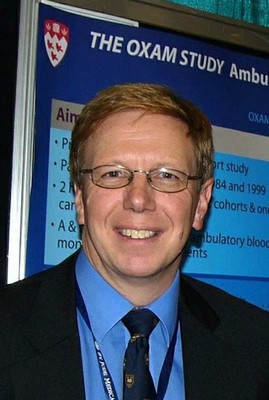 Chair of Department of Family Practice University of British Columbia
Past Chair of Department of Family Practice McGill University
How good a doctor are you? Probably if you are reading this you are interested, caring, empathic, incredibly busy, and not so well paid!
So how well do you look after your diabetics and hypertensive patients. Our days are just too hectic and I am too tired in the evening to do an audit. I know an electronic record will help me do my audit and with some prompts and bright red colours on the screen, it will even remind me to iteratively address the important items I may have missed during the consultation. But I don’t have lot of money for a commercial electronic medical record (I work in Quebec).
Along came OSCAR to the rescue. An accredited EMR that is free. No strings. We just bought two servers running Linux, an uninterruptable power supply, rescued a couple of old PC’s from the basement and we were in business. A day of installation by David and Jay, a day of training, and we had a fully functional record. The support group has been great with its valuable tips and some hand holding.
OSCAR has now been running at the Queen Elizabeth Urgent Care Clinic since May. With over 20,000 patients now registered on the system we have cracked that process. Fourteen doctors are using the system and have made more than 8,500 clinical note entries and over 1,000 prescriptions. We have nurses doing triage on all our patients and two months ago started using the system for that. With 500 patients seen per week about half of all consultations are now paperless and the number is increasing. In this high volume high pressure clinic this is truly amazing. We have now scanned in one of our shelves (18ft) of charts and no longer are worrying about running out of space. All the charts of the doctors who are still using paper charts are being scanned. It is all a gradual process. The primary aim was to keep the clinic running smoothly and to achieve 50% electronic data entry in this setting within 7 months was a major accomplishment.
So having proved to ourselves that OSCAR works – as a family doctor I always have to see the drug work in my patients before I really decide to use it – I am now encouraging our three Montreal teaching units to adopt OSCAR. St Mary’s hospital family medicine unit are the most active and we hope will be asking Jay and David to deliver one of their preloaded systems in a month or two. Then there will be the Herzl and finally the Cote Des Neiges site. There are hurdles as these sites are inside government hospitals ( I know – why should a family medicine unit be anywhere near a hospital) with their own IT systems. However if we can crack these then there is no end to expansion.
Oh – and in case you want the French version Jay is setting up a test version in the next few days on our server. Some beta testing and then we will be asking our Francophone colleagues to join the OSCAR party. They have some pretty neat decision tools and information resources that will be an excellent add on to the system.
So what is the big deal? After all I was using an electronic record in the UK for 15 years before I came to Canada in 2002. Well the big deal is that so far in total with printers, scanner, a new laptop we have spent under $12,000. The second big deal is that it is working in an urgent care walk in clinic which is the hub to three off site clinics in a group network. We are setting it up in stages so only one remote clinic and the urgent care clinic is running today but that means that when a patient is seen from our group the whole record is available whether they are in urgent care or their “own” group practice. Complete availability of essential medical information in a multi-site practice, incredibly cheap, and it works out of the box.
I nearly forgot. We will soon be using the audit functions to see how good we actually are.
Dr. Jel Coward
Pemberton BC
OSCAR, world leading!, academic led!, free!, open-source!
5 years ago I knew the last three of those things, and I suspected the potential for the other. Today I know them all to be the case. OSCAR is an inspiring project, but most importantly it is absolutely the most useful tool in my clinical armamentarium.
No-one in our office would give up OSCAR. We had two IT refuseniks when we first talked about implementing an EMR, within a week they had both given up writing and were merrily charting and prescribing in OSCAR.
......and now with the advent of MyDrugRef (the social networking drug information service for physicians) and MyOSCAR (a Personally Controlled Health Record) the OSCAR community is moving on into newer and even more exciting waters.
Warning: Don't get involved in OSCAR if you don't like rapid progress!
Dr. Quentin Smith
Crossroads Family Practice, Chilliwack BC
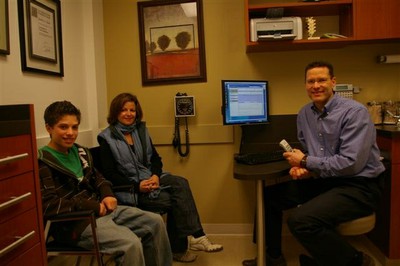 The electronic medical record along with voice recognition software has revolutionized my practice and represents the single most significant change in my practice in the last 20 years.
OSCAR is something that I think is incredibly important in the evolution of the use of information technology with an application to the medical field in British Columbia.
In order to move ahead with modernization of my own practice, I left my previous practice where there was little appetite for the turmoil of significant change, and joined forces with another 3 physicians as of October 2006. We became one of Fraser Health's Enhanced Family Practices.
What happened however, was something I had never anticipated. My new partners felt that we needed to look at all the options including open source software, namely OSCAR out of McMaster. To my chagrin, I had never really heard of or fully understood the concept of open source software.
While all the other vendors are excellent, the very principle behind OSCAR was appealing to the rest of the physicians in my group.
We implemented our system and went live in May of 2007. While change is always hard, and we have worked incredibly hard at the process of moving from paper charts to electronic charts, I can truly say that this has been the single most important change to my practice in 20 years. There has been a significant improvement in our workflow and efficiency, I am using voice recognition for data import into the computer, and I do not believe there is a better way to extract information when needed, than from an EMR that is well-organized and accessible from not only the office, but remote sites as well.
What has blown me away however is the culture around OSCAR.
· There is a very active discussion group, and the level of knowledge of computers, software, programming, programs, billing etc. amongst this group of physicians is staggering to me. The level of support for one another, and the willingness to share fixes based on experience, creates a safe place for new users.
· The program itself is simple yet powerful.
· It is free.
· The argument that "you get what you pay for" just doesn't wash in this situation. We have not paid, and yet we have got plenty.
· Because it belongs to everyone, everyone has a stake and there is a motivation among the group to produce improvements, offering those improvements to the entire group.
· What really has opened my eyes is the degree of computer literacy in this group. Combine that with the flexibility of having access to code, and you have a recipe for quick fixes. Let me explain: Within our practice, Dr. David Page, along with one of our then residents, now locum, Dr. Shelter Lee were responsible for the creation of no less than 140 electronic forms. Please remember that that was in just under 7 months! These forms are
o requisitions currently used for tests, including significant shortcuts and levels of sophistication which are very impressive, including the ability to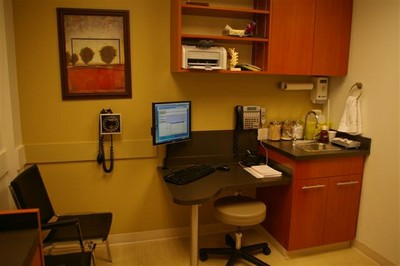 draw electronically the site of any palpated masses on the breast mammography requisition.
o Special authority forms
o informational forms for the patient around processes such as mucomyst protocol for contrast use in imaging
o a new form for the Complex Care initiative from GPSC (which was created within weeks of us beginning to perform these visits: ie. no need to wait for the next build)
§ the second generation of this form has guidelines and patient handouts embedded into it, all made from our office, and able to be shared to any other Oscar users..
o clinical tools such as genogram, rheumatoid diagram delineating which joints are involved in arthritis, surface anatomy drawings including the ability to annotate, prostate symptom score, mini-mental, PHQ 9 depression scores, Ottawa ankle rules, and the list goes on.
o Sick notes, referral notes to allied health professionals etc. can all be done in seconds.
o Bear in mind all of these e-forms have the ability to automatically fill with demographics of the patient, and we can voice dictate clinical details into them should we so wish.
· Others in the group of our predecessors had worked on the B.C. prenatal form which is excellent, and a B.C. grown INR tracking device which was also excellent.
· The beauty of the system is that if somebody contributes an improvement, everyone benefits. Our e-forms have been shared nationally.
· There are of course new builds periodically, based on the usual process of user input, and those responsible for coordinating these rebuilds are people in B.C. like, Dr. Jel Coward, and Dr. Colleen Kirkham who has been a tireless champions, and from Ontario Dr. David Chan, the originator of the program. People who truly believe in the concept, and have spent countless hours of personal time simply serving others in this way.
· On the technical side, the hardware that we are using to run this is incredibly simple and cheap. There is nothing fancy that is required. We have local servers which are fast and uncluttered.
· Laboratory data that is now coming in from the Health Authority as well as B.C. Biomedical Labs electronically through Excelleris.
· Laboratory module that is providing grid views of lab data giving one a beautiful historical view of all the tests done on the patient.
· Diabetes care form (CDM flow sheet) and the hypertension flow sheet which is auto-populating the laboratory values. It should be noted, that there is an appetite to attempt to produce one CDM flow sheet which will be applicable and assist in the management of each of the CDM's.
OSCAR has advanced and matured despite having very little, if any, funding. That is an unbelievably remarkable situation. It will continue to flourish no matter what happens in the future, because of the philosophy behind it. I believe more physicians should be aware of this possibility, and from a funding point of view there is an awful lot that we could do with very little.
It should also be recognized that in Ontario, OSCAR was the first of any of the vendors to complete the validation execution of CMS specification 2.0 in January 2008.
Dr. Steve Adilman, Vancouver Native Health Service
 Our experience with OSCAR has been very rewarding. Our clinic is a very busy community clinic in Vancouver’s Downtown Eastside. We have 4 FTE family doctors, a nurse, and specialist support each week in Ophthamology, Internal Medicine and Psychiatry. As well, we tutor medical students and residents and EVERYONE has been very pleased with our conversion to OSCAR. We converted from paper in late November 2008 and the transition was remarkably smooth. In fact, the transition was met with renewed enthusiasm amongst all office staff. Everyone was a buzz with the new system and excited to share their insights and struggles with each other. Some of our doctors use voice recognition software and others are happy to type. Several of our physicians have used other EMRs in other locations and all have commented that OSCAR is the most user-friendly EMR that they have used. It is very robust and customizable and the community of users is dedicated to improving and updating OSCAR regularly. The online OSCAR usergroup is populated with many doctors and programmers with a wealth of knowledge who are always willing to help solve any problem we encounter. We only wish more people knew about it. Don’t be fooled by the price-it may be free, but it certainly isn’t a lesser product than any of the costly proprietary EMRs and from our experience it is better!
Document Actions